A Daily Routine Chart for Kids That Leaves Room for Real Life
Forget the perfect timetable. Start with a short sequence your child can see, help shape, and actually use.
By Buybili Editorial Team Published October 2, 2026 6 minutes
“Get ready!” can mean six different jobs to a child. A useful daily routine chart makes those jobs visible, without turning family life into a minute-by-minute schedule.
The goal is a shared reminder. It is not a test, a punishment board, or a promise that mornings will suddenly become effortless. For children roughly ages 4–9, begin with one part of the day and a handful of steps.

Build the chart around your real morning
Notice what already happens. Does your child eat before dressing? Is the backpack packed the night before? Write the steps in your household’s order, rather than copying someone else’s ideal routine.
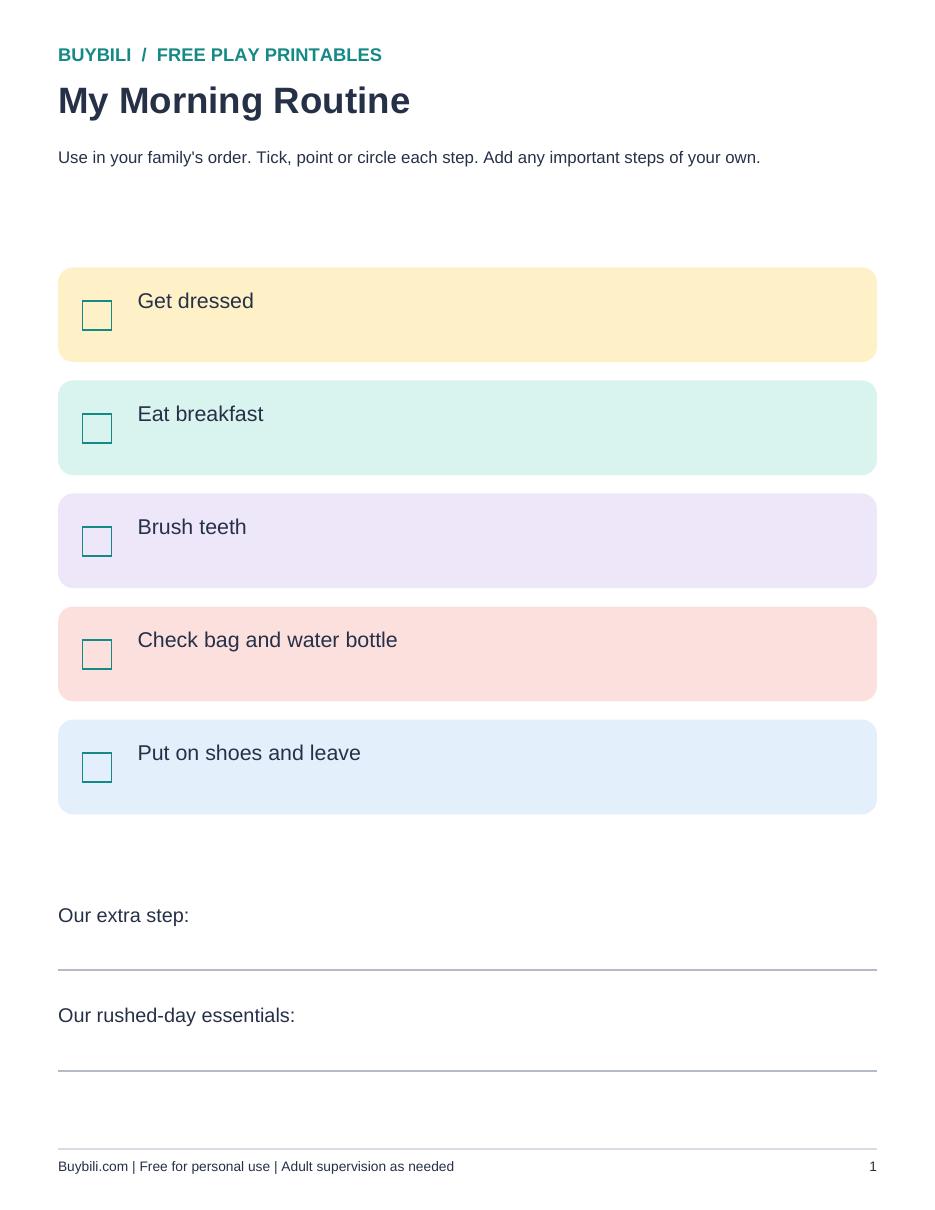
Here is a starting point you can copy into a notebook or onto a whiteboard:
Put bathroom visits, medications, or other household-specific steps where they belong. Medication directions should come from the child’s clinician, not from a generic chart.
| Morning | After school |
|---|---|
| Get dressed | Put bag and shoes away |
| Eat breakfast | Have a snack and drink |
| Brush teeth | Choose a short rest or play break |
| Check bag and water bottle | Check today’s homework together |
| Put on shoes and leave | Start one small task, if needed |
1Use pictures that mean something to your child
Draw a shirt for dressing and a backpack for the bag check. A quick phone photo of your child’s actual shoes may be clearer than a decorative icon.
Keep words short and put the chart where the routine happens. A beautiful chart behind a bedroom door is less useful than a plain one beside the clothes drawer.
2Give each step a visible finish
Your child can tick a box, move a large paper card to a “done” column, or point to the next picture. Use a method they enjoy and can manage.
Avoid detachable small magnets where younger children can access them. Paper cards and adult-applied tape work well as a simple alternative.
3Offer choices inside the sequence
“Red shirt or blue shirt?” is easier to answer than “What do you want to do now?” Keep necessary steps steady, while offering a little control over how they happen.
For after-school downtime, try “Would you rather draw or play outside with me?” Decide together when you will check the next step.
4Practice when nobody is rushing
Try a pretend school morning on a weekend. Let your child teach a stuffed animal how the chart works. You may discover a missing step, an unclear picture, or a place where they still need your help.
5Create a rushed-day version
Make a short backup sequence for late mornings: essential care, clothes, food, bag, shoes. Adjust the order to your family and include necessary health or safety steps.
A rushed day does not erase yesterday’s effort. Return to the usual chart next time.
What if the chart gets ignored?
Check the design before adding more reminders. Is it too long? Too far away? Does a step actually contain several jobs? Replace “Prepare backpack” with “Put folder in bag,” if that is the sticking point.
Review it together after a few days. Ask, “Which picture helped? Which one should we change?” The best chart is the one your family keeps adjusting—not the one that looks most impressive online.
Free Printable
Get Your Free Morning and After-School Charts
Print the two-page routine pack. Use the morning page, after-school page, or both. Tick the steps by hand and add your family's extra steps. Reorder the sequence on your own paper if these steps do not match your day.
Print on US Letter paper. For A4, choose Fit to Printable Area. Free for personal use.
Paper printable for handwriting; not an interactive PDF form. 2 pages.