10 Gentle Ways to Soothe and Play With Your Baby (0–12 Months)
By Buybili Editorial Team · 6 min read
Some babies settle with a familiar voice or a gentle cuddle. Others want a quiet break. These ten ideas combine comforting routines with simple, age-appropriate play. Follow your baby's cues: if they turn away, yawn, or become fussier, pause and reduce stimulation. No toy is guaranteed to stop a baby from crying.
Before You Try a Game
First check feeding, diaper, temperature, tiredness, and whether your baby may be ill or in pain. A fussy baby may need less stimulation, not another activity.
Safe sleep always comes first
These toys and activities are for supervised awake time. Put a baby on their back in an approved, flat, empty sleep space. Never leave toys, books, mirrors, stuffed animals, pillows, or loose bedding in the sleep space. If a baby falls asleep in a swing or other seated device, move them to an appropriate sleep space.
10 Gentle Ideas
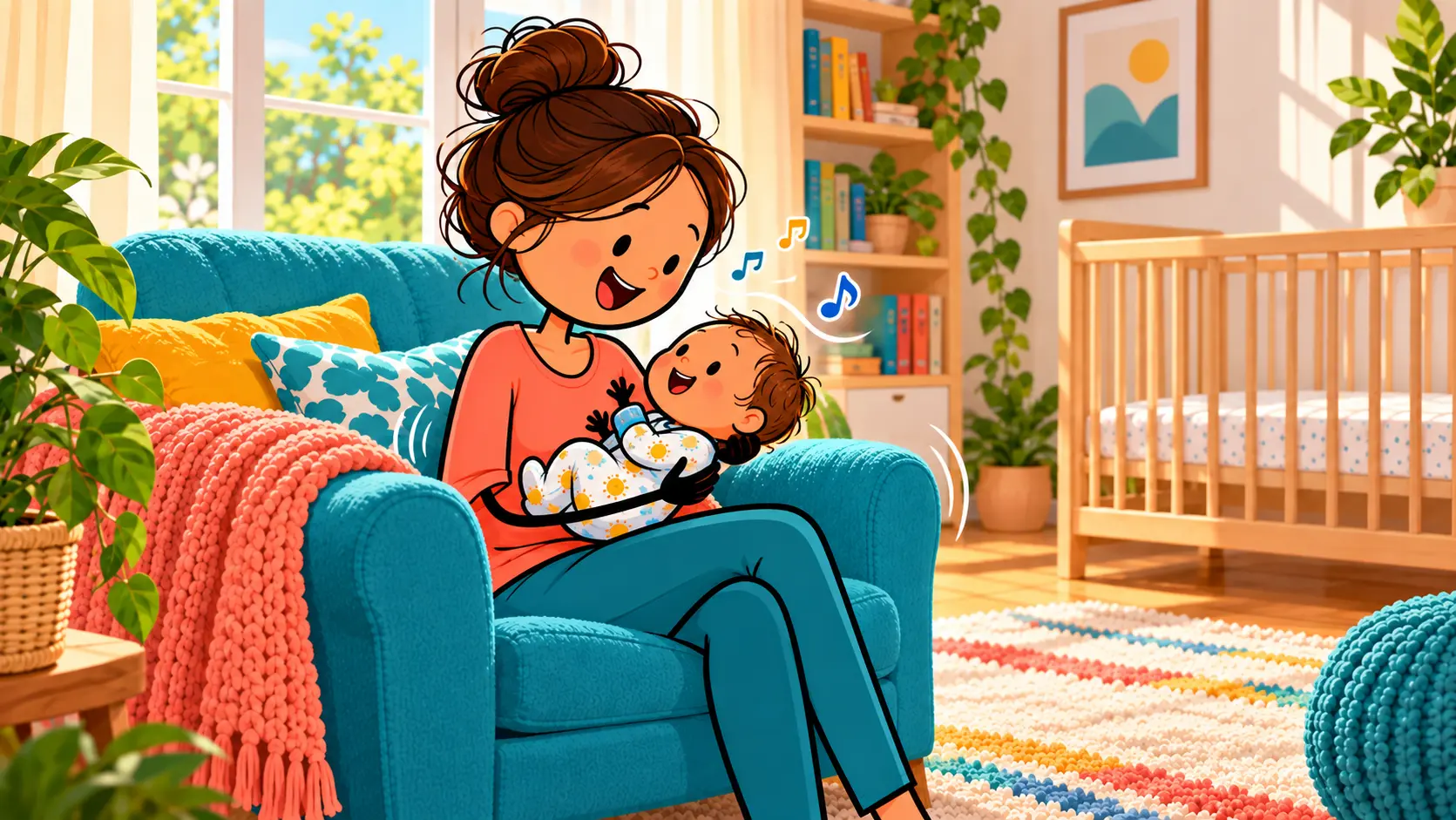
1. Cuddle and Talk
Birth–12 monthsComfortWhat to do: Hold your baby securely, make gentle eye contact, and speak slowly about what you see. A familiar voice and responsive attention can help a baby feel safe.
Optional item: None.
Safety: Support your baby's head and neck, especially in the early months.

2. Hum and Gently Rock
Birth–12 monthsComfortWhat to do: Hold your baby securely and try one quiet song with a slow, steady rocking motion. If your baby seems overwhelmed, make the movement smaller or stop.
Optional item: None; a comfortable chair is for the adult, never a place to leave the baby sleeping.
Safety: Keep movements slow and small. Never shake a baby.
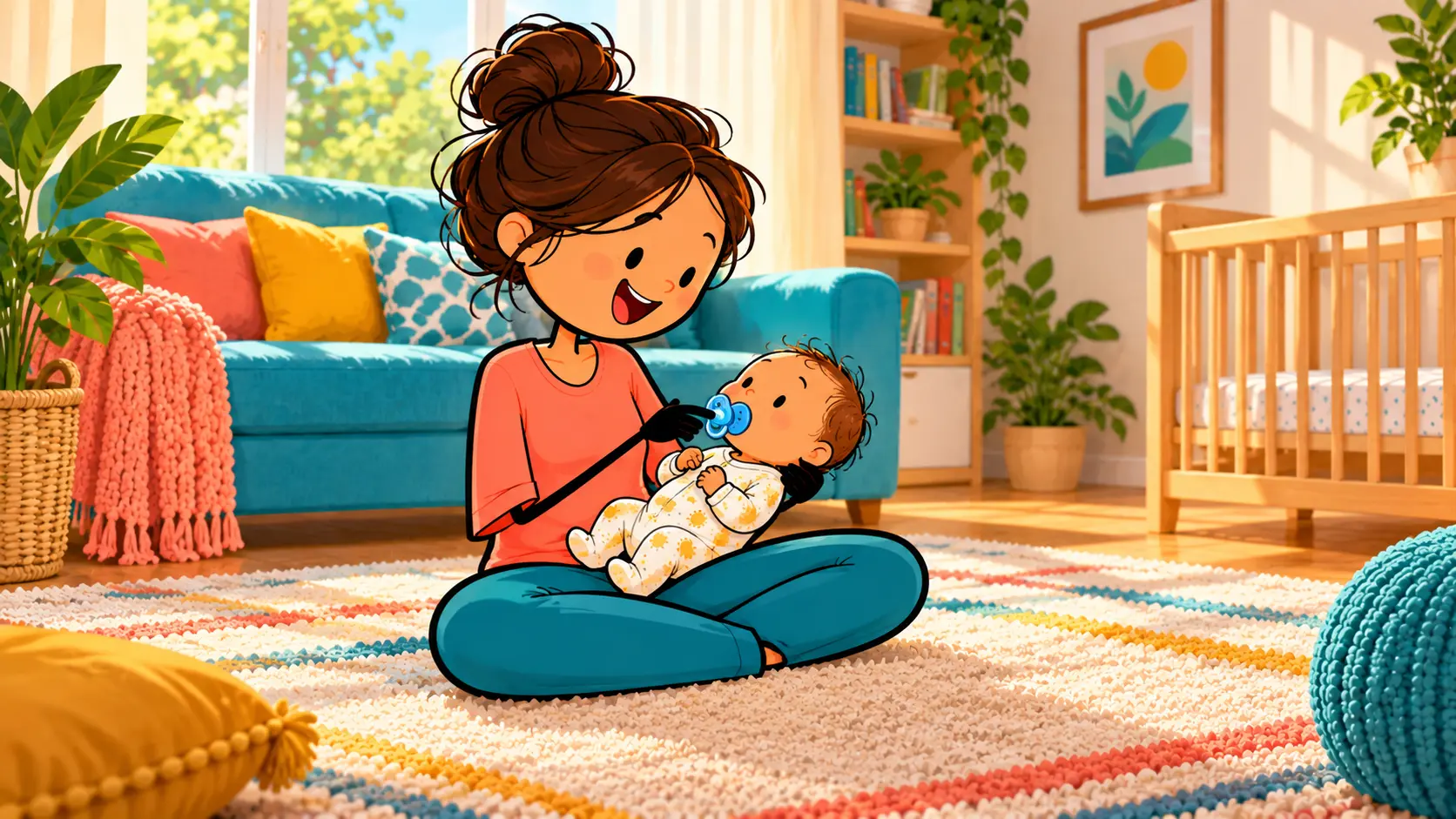
3. Offer a Pacifier
Birth–12 monthsComfortWhat to do: If your baby accepts a pacifier, offer an age-appropriate, intact one after checking basic needs. Do not force it or attach it to a cord for sleep.
Optional item: One-piece, age-appropriate pacifier.
Safety: Check it for cracks or tears before each use and replace it when damaged.
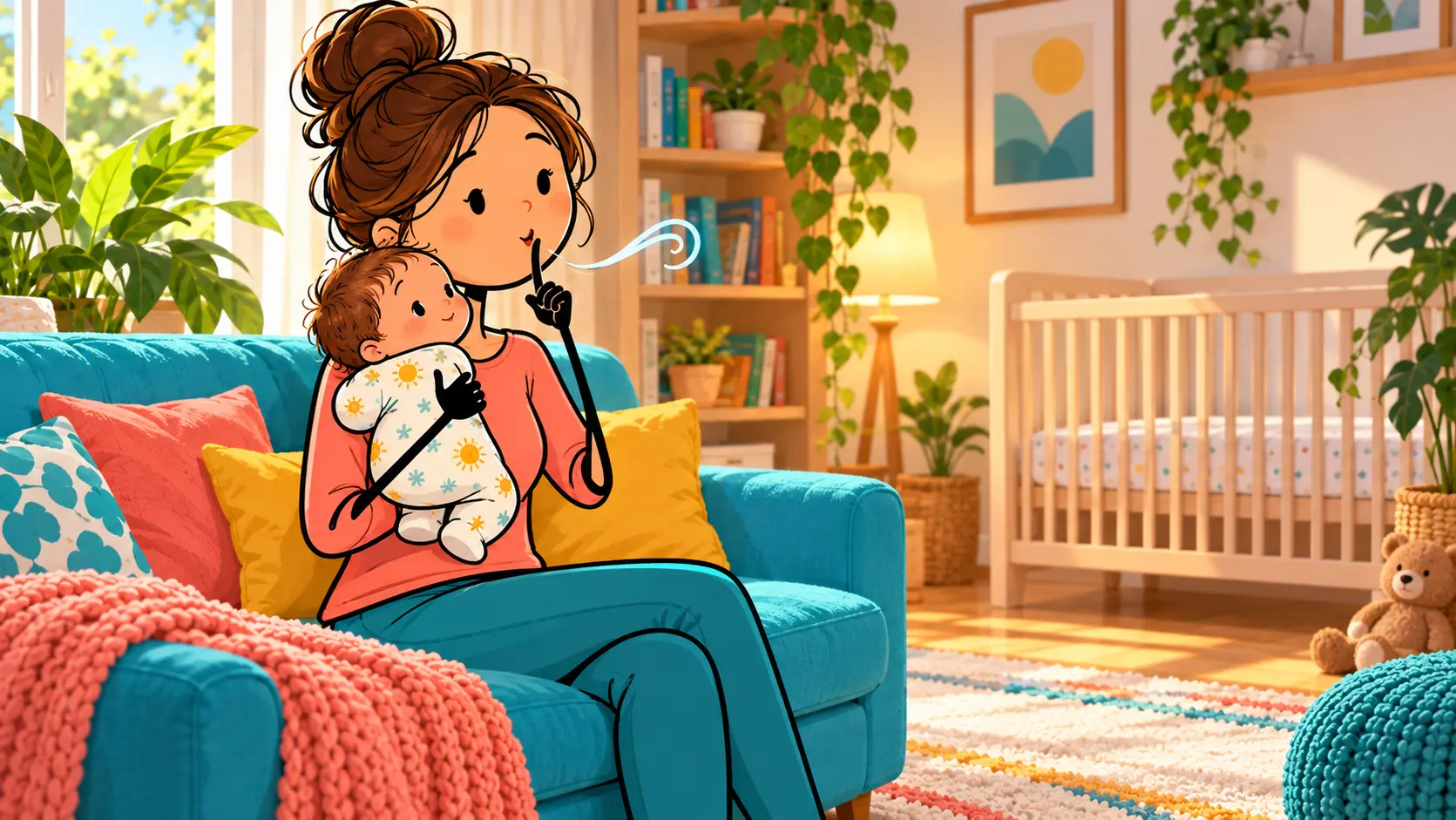
4. Soft Shushing
Birth–6 monthsComfortWhat to do: While holding your baby, try a quiet, steady “shh” or gentle background sound. Keep the sound low and away from the baby's head.
Optional item: None; a sound machine is not necessary.
Safety: Keep any sound quiet and never right next to your baby's ear.
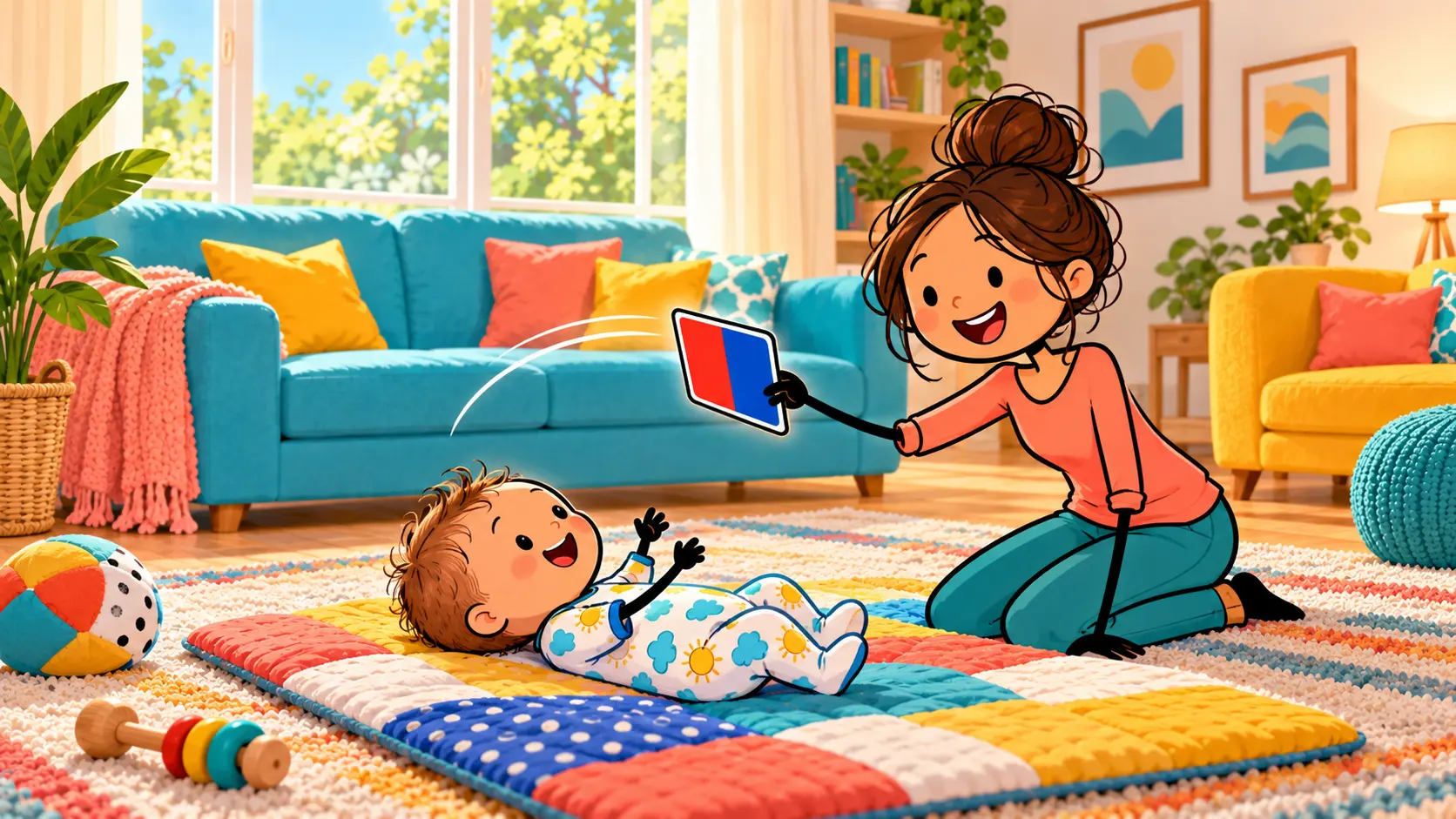
5. Slow Color Follow
About 2–4 monthsQuiet playWhat to do: While the baby is awake and lying safely on their back, slowly move a simple colorful card or toy within their view. Stop if they look away.
Optional item: Sturdy, baby-safe visual card.
Safety: Stay with your baby the whole time and remove the card afterward.
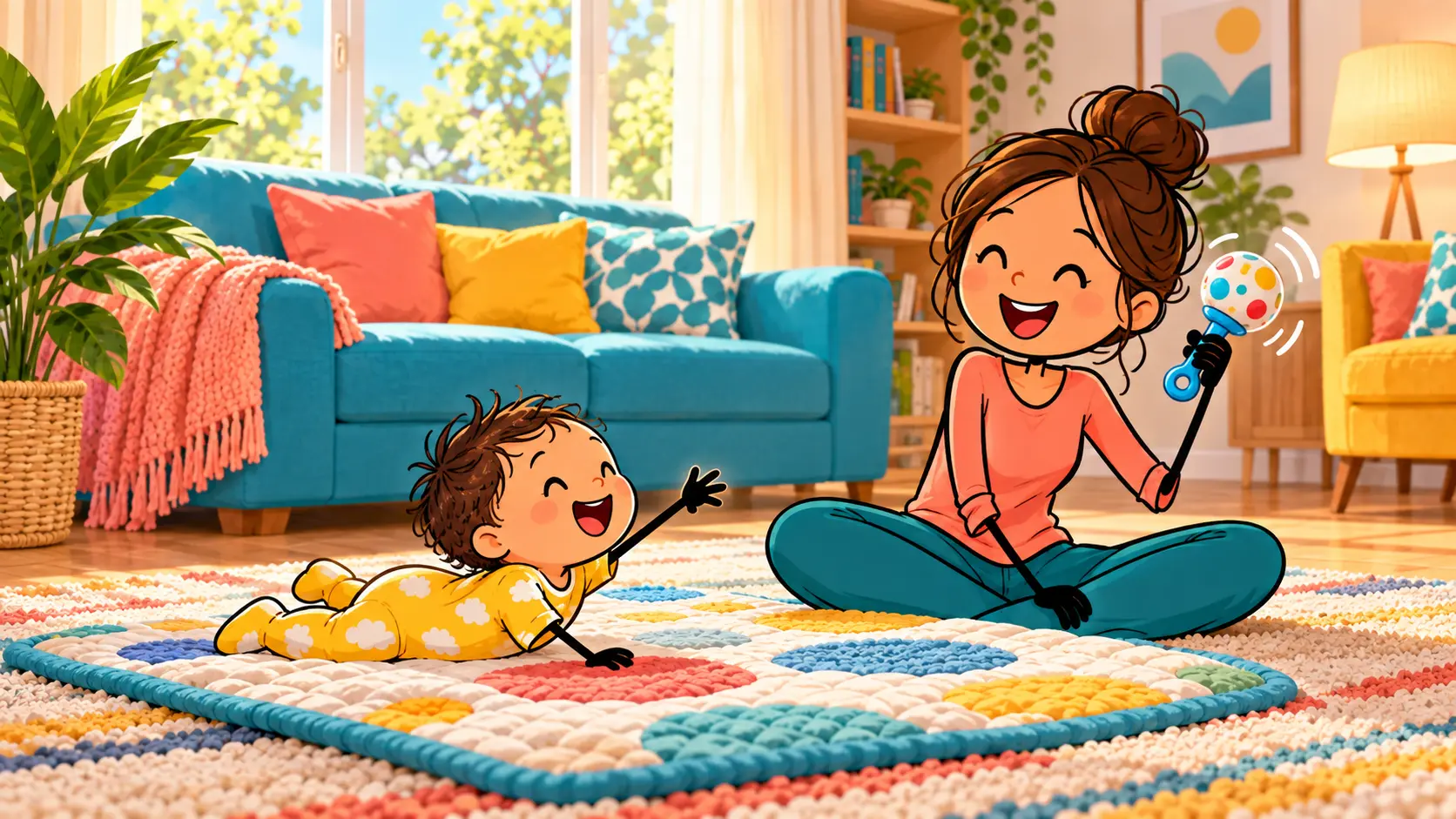
6. Little Rattle Conversation
About 4–6 monthsQuiet playWhat to do: Show a lightweight baby-safe rattle, make one gentle sound, then pause for your baby to look or respond. Keep the sound soft.
Optional item: Age-labeled rattle without loose parts.
Safety: Check that the rattle has no small or detachable parts.
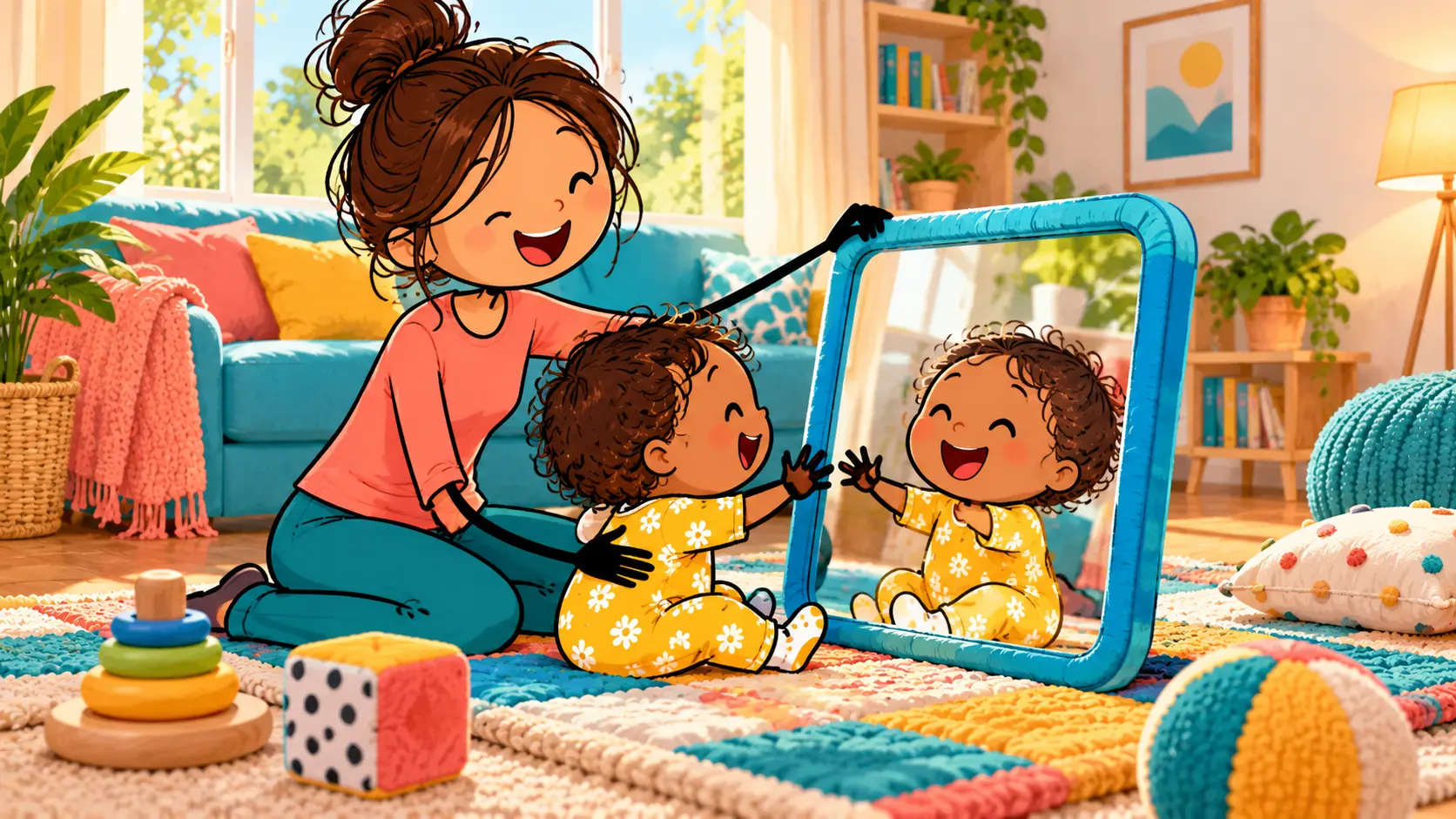
7. Mirror Faces
About 6–9 monthsQuiet playWhat to do: Hold a baby-safe, unbreakable mirror during supervised awake play. Smile, name the expression, and pause for your baby's response.
Optional item: Baby-safe mirror.
Safety: Use only an unbreakable baby mirror, and never leave it in the sleep space.
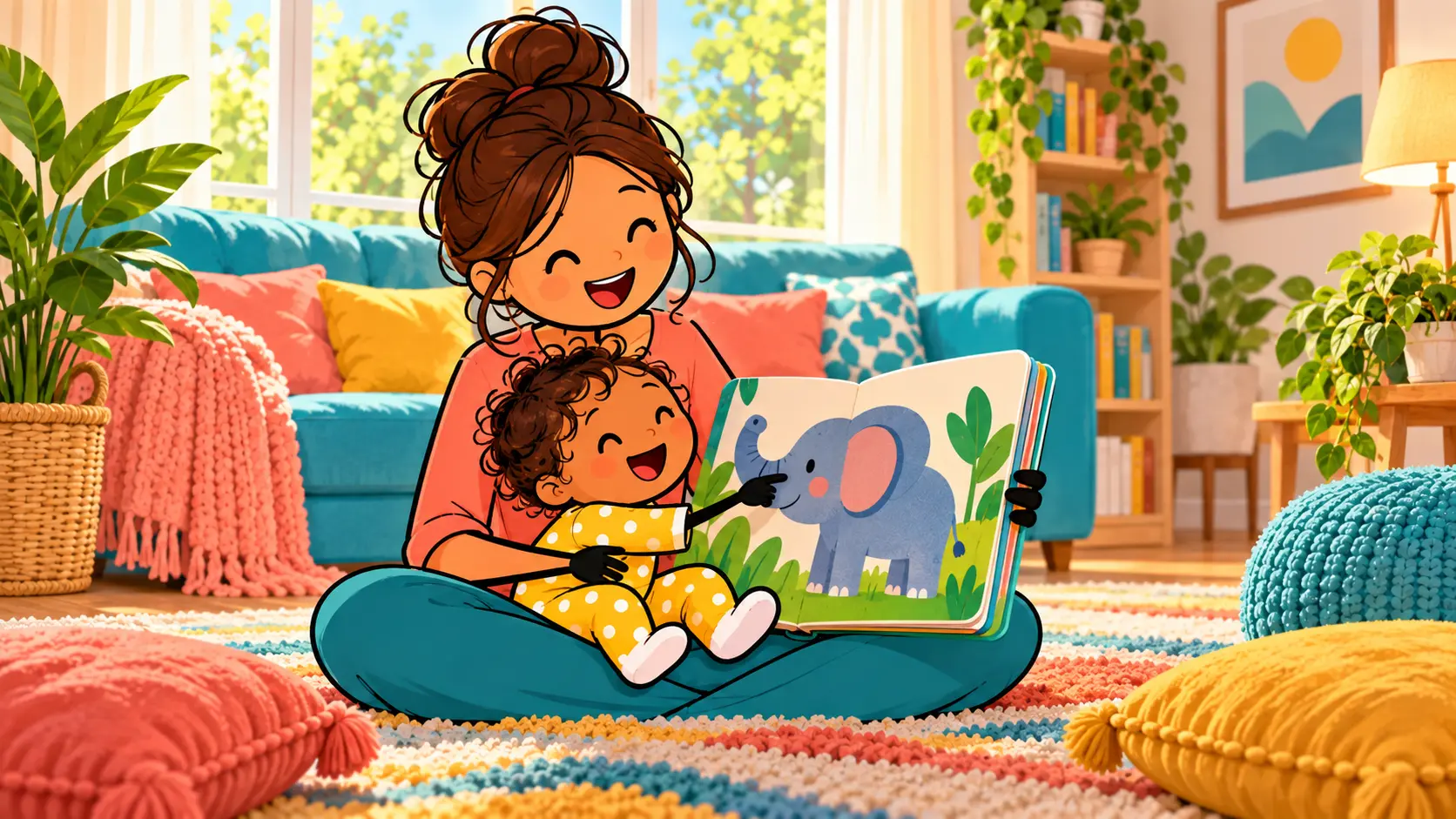
8. Picture-Book Whisper
About 4–12 monthsQuiet playWhat to do: Sit together and slowly point to pictures in a cloth or sturdy board book. Name one or two things on each page.
Optional item: Age-appropriate cloth or board book.
Safety: Choose books without small attachments, and stop when your baby loses interest.
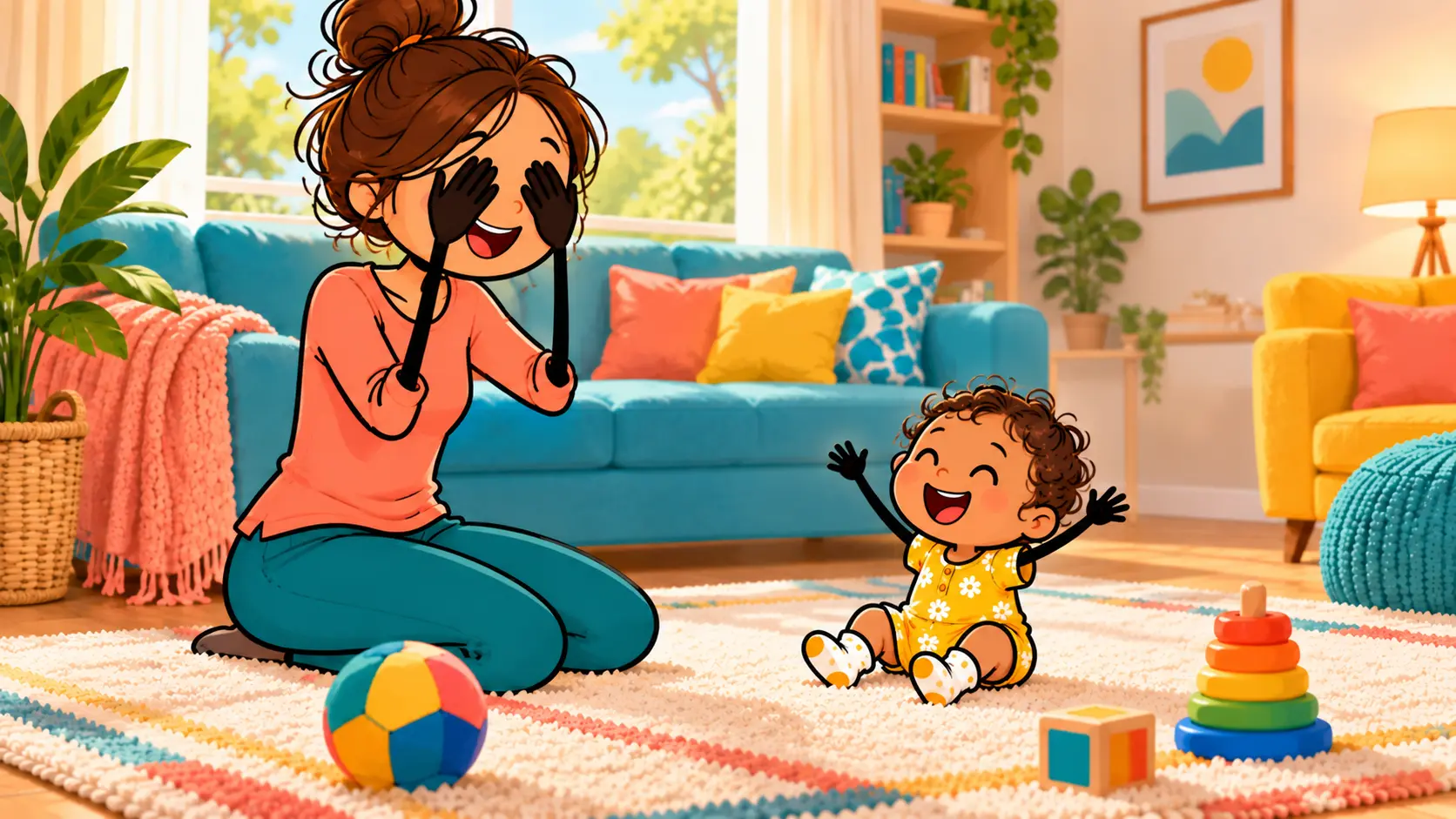
9. Peekaboo With Your Hands
About 6–12 monthsQuiet playWhat to do: Cover your own face briefly with your hands, then reappear. Keep it gentle and stop if your baby does not enjoy it.
Optional item: None.
Safety: Never cover the baby's face.
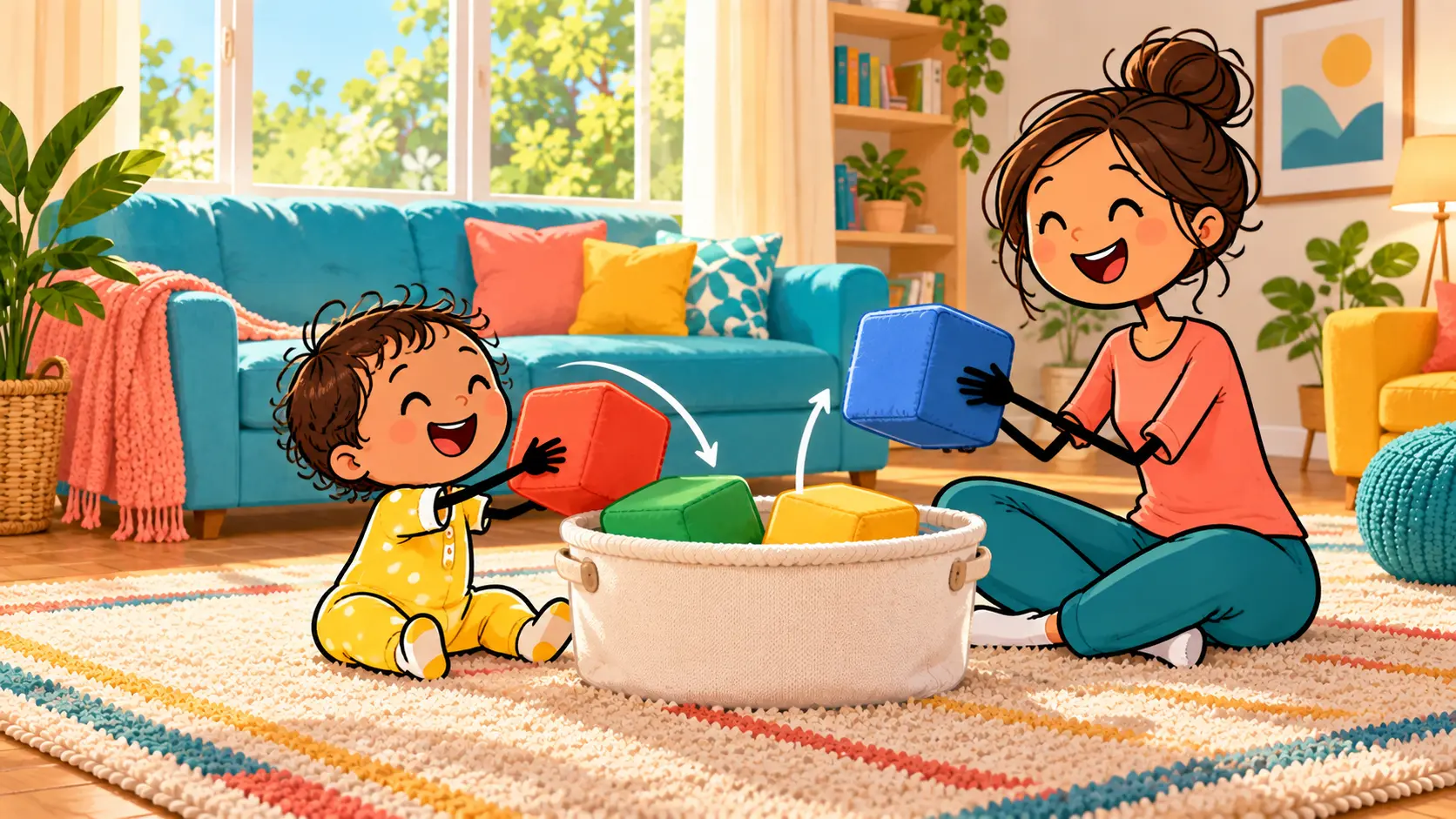
10. In, Out, Your Turn
About 9–12 monthsQuiet playWhat to do: Place a large baby-safe block into a container and take it out together. Pass it back and forth, following the baby's interest.
Optional item: Large age-appropriate blocks and an open container.
Safety: Use blocks too large to fit in your baby's mouth, and supervise closely.
Choosing a Toy
- Check the manufacturer's age label.
- Avoid small or detachable parts.
- Inspect toys for damage before each use.
- Check applicable product recalls.
No specific product is clinically proven to soothe babies.
Sources
- HealthyChildren.org (AAP) — Self-Soothing: Helping Your Baby Learn This Life Skill
- CDC — Milestones by 2 months
- CDC — Milestones by 4 months
- CDC — Milestones by 6 months
- CDC — Milestones by 9 months
- CDC — Milestones by 1 year
- CPSC — Safe Sleep
This article offers general information, not medical advice. Contact your pediatrician if you are worried about your baby's crying, feeding or health.