5 Screen-Free Play Activities for Kids with ADHD
Five playful ideas for moving, taking turns and creating together—with flexible rules and no pressure to win.
By Buybili Editorial Team Published October 2, 2026 7 minutes
A good play session does not have to last an hour or end with a winner. Pick one of these short games, explain the first step, and adjust as you go.
These original Buybili play ideas are for families with children around ages 5–10, including children with ADHD. Choose according to your child's interests, abilities and comfort. The suggested times are flexible, not targets.
Before you start
Offer two activity choices. Demonstrate one step at a time, agree on a way to pause, and leave room for breaks. Noise, movement and background sound suit different children differently. These adaptations reflect general CDC parent guidance, not evidence that these particular games treat ADHD. Use clear floor space, supervise as needed and stop if a child is uncomfortable.
Animal Action Cards
- Time
- 5–8 minutes
- Materials
- Paper and crayons

How to play
- Draw three cards: a penguin, a butterfly and a cat.
- Let your child pick one. Show a small movement: penguin steps, butterfly arms or a cat stretch.
- Copy each other for one short turn, then switch who leads.
- Finish whenever either player wants a break.
Easier option: Use two cards, or play seated with hands and arms.
Variation: Add an animal your child invents.
Keep it playful: No chasing, elimination or loud surprise sounds.
One-Clue Color Hunt
- Time
- 5–10 minutes
- Materials
- A colored sheet of paper and a basket

How to play
- Show one color and ask your child to find one safe object that matches.
- Walk together and put it in the basket.
- Let your child set the next color clue.
- Compare your small collection and put everything back together.
Easier option: Place three suitable objects on the table instead of searching the room.
Variation: Search for something soft or something round.
Keep it playful: Stay in an agreed area. No climbing or collecting sharp, breakable or tiny objects.
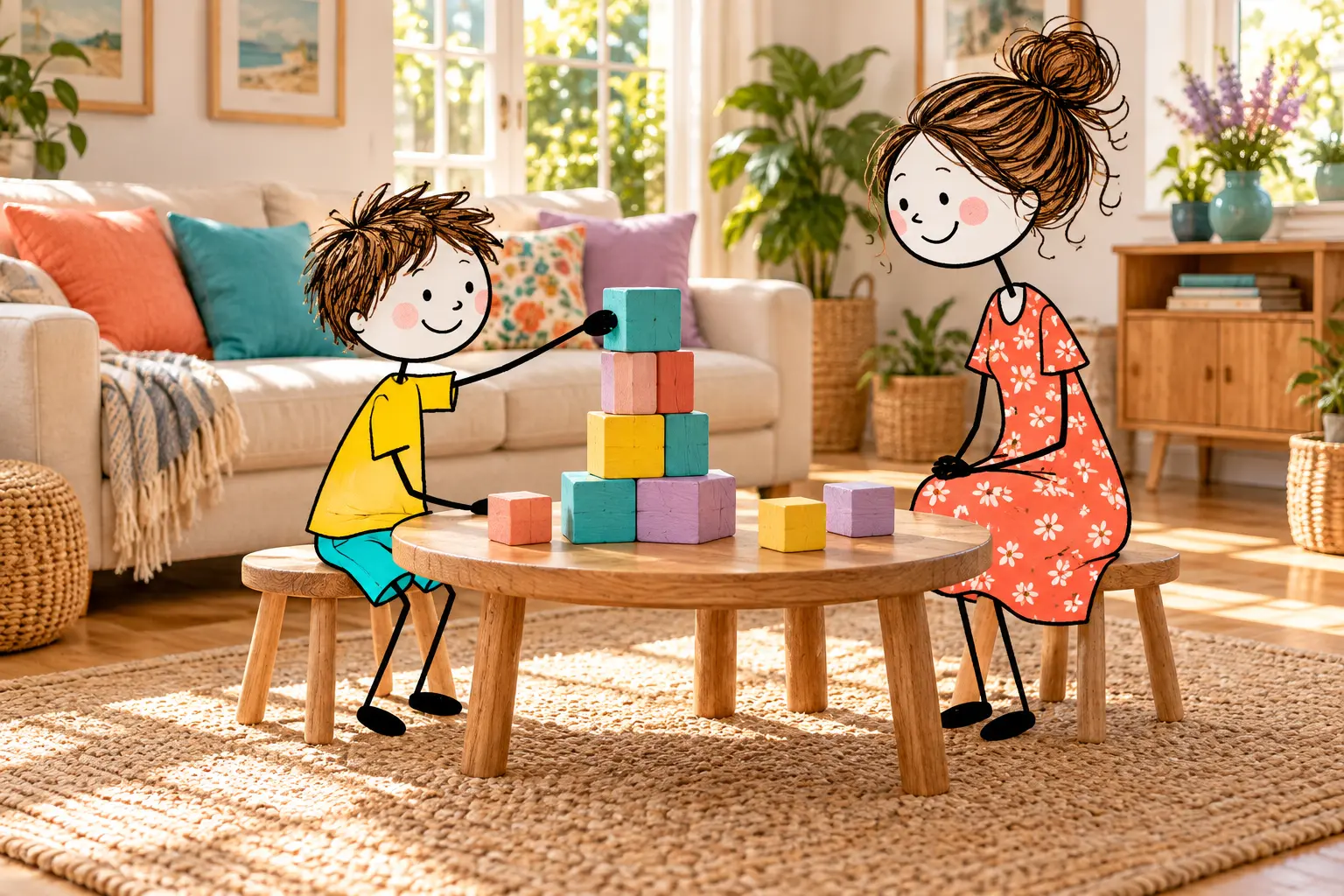
Build a Tower Together
- Time
- 5–10 minutes
- Materials
- Large blocks or paper cups
How to play
- Choose a base spot on the floor or a low table.
- Each player adds one block or cup per turn.
- Work toward a shared creation instead of the tallest tower.
- If it falls, choose together whether to rebuild or try a different shape.
Easier option: Build side by side and take turns showing your creations.
Variation: Make a bridge or a house.
Keep it playful: No score, speed challenge or required sitting still. Use age-appropriate pieces, especially around younger siblings.
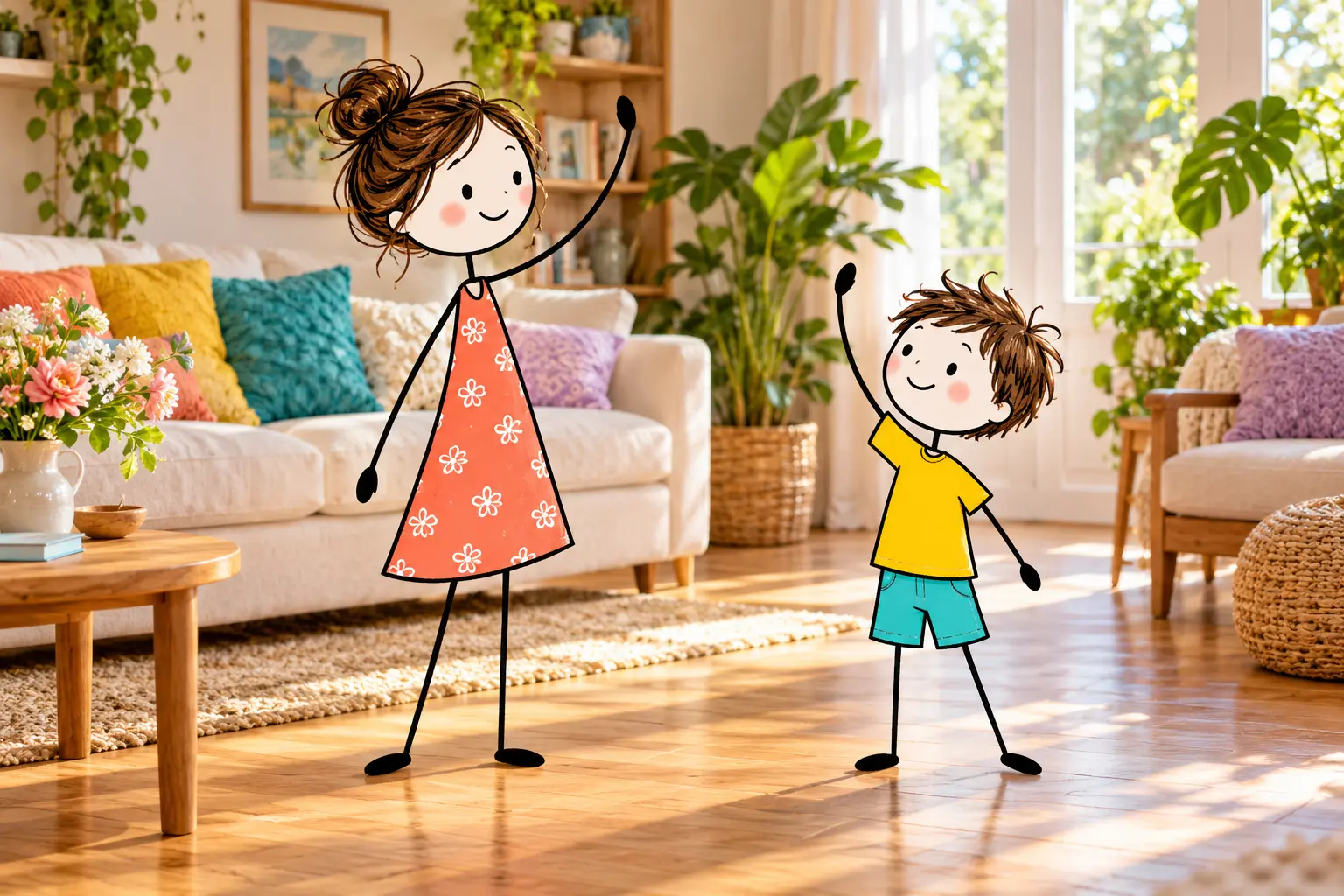
Mirror-Me Moves
- Time
- 3–5 minutes
- Materials
- None
How to play
- Face each other with enough space to move comfortably.
- One person makes a slow movement, such as waving, stretching arms or tapping shoulders.
- The other copies the movement.
- Swap leaders after two or three moves.
Easier option: Copy one hand movement while seated.
Variation: Pretend to move like a robot or a tree in the wind.
Keep it playful: No requirement to maintain eye contact, freeze perfectly or copy exactly. Your child can change a movement or pause.
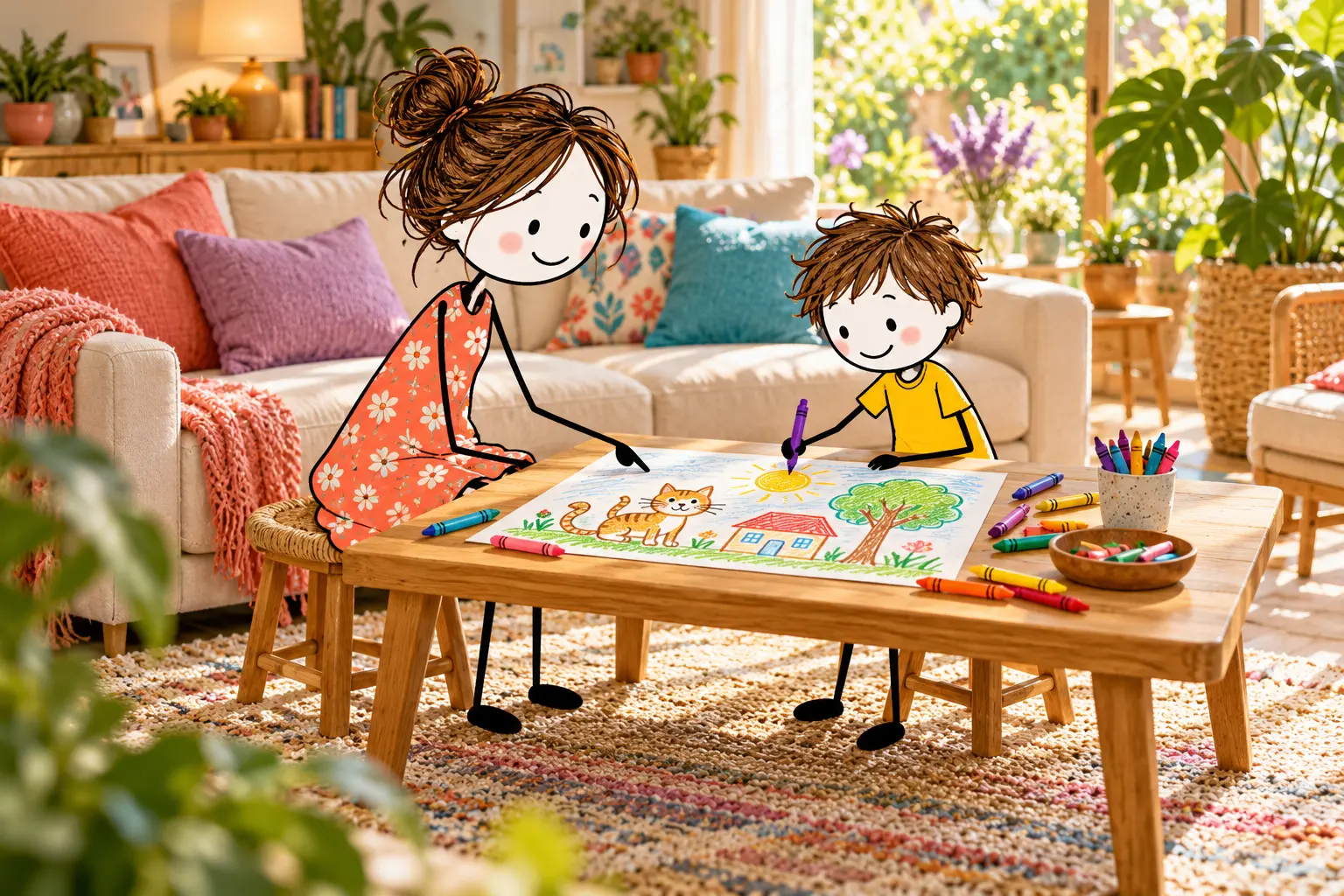
Draw-and-Tell Story
- Time
- 5–10 minutes
- Materials
- Paper and crayons
How to play
- Draw a simple character together.
- Ask: “Where could our character go?”
- Each person adds one drawing or one short sentence.
- End with a silly surprise or leave the story unfinished for another day.
Easier option: Let your child point or draw while you do the talking.
Variation: Use favorite animals as characters, or tell the story standing up.
Keep it playful: There is no correct story, spelling test or demand to finish.
Pick one for today
Want to move? Try Animal Action Cards or Mirror-Me Moves.
Want to make something? Try Build a Tower Together or Draw-and-Tell Story.
Want a small adventure? Try One-Clue Color Hunt.
Start with one round. Afterwards ask: “Keep it, change it, or try something else?”
Further reading
CDC parent guidance. CDC supports the general adaptation principles above, not these five specific games.
Related reading: 7 Practical Ways to Make Daily Routines Easier for Kids with ADHD